

World War II, spanning from 1939 to 1945, was a global conflict that involved most of the world’s nations, including all of the great powers, eventually forming two opposing military alliances: the Allies and the Axis. It was the most widespread war in history, with more than 100 million people serving in military units, and resulted in an estimated 50-85 million fatalities, making it the deadliest conflict in human history.
Origins of the War
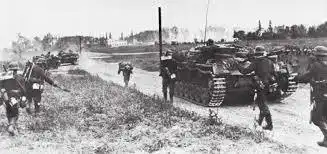
The war began in September 1939 when Nazi Germany, led by Adolf Hitler, invaded Poland. This act of aggression prompted the United Kingdom and France to declare war on Germany, marking the beginning of the conflict in Europe. Over the next year, Germany expanded its territorial control, invading and occupying several European countries, including Denmark, Norway, Belgium, the Netherlands, and France.
In June 1941, Germany launched a surprise attack on the Soviet Union, known as Operation Barbarossa, which led to a prolonged and bloody campaign on the Eastern Front. Meanwhile, in Asia, Japan had been expanding its empire since the 1930s, invading China and Southeast Asia.
The United States’ entry into the war came after Japan’s surprise attack on Pearl Harbor in December 1941. This led to a formal declaration of war by the United States against Japan, and subsequently against Germany and Italy, as well.
Major Theaters of the War
The war was fought across multiple theaters, including:
- The European Theater: This involved the Western Allies (the United Kingdom, France, and the United States) fighting against Germany and Italy in Western Europe, North Africa, and the Mediterranean.
- The Eastern Theater: This involved the Soviet Union fighting against Germany on the Eastern Front, which included the battles of Stalingrad and Leningrad.
- The Pacific Theater: This involved the Allies (the United States, Australia, and New Zealand) fighting against Japan in Southeast Asia, the Pacific Islands, and China.
Key Events and Turning Points
Several key events and turning points shaped the outcome of the war:
- The Battle of Britain (1940): The German air campaign against the United Kingdom failed to gain air superiority, marking a significant turning point in the war.
- The Invasion of the Soviet Union (1941): Germany’s failure to defeat the Soviet Union led to a prolonged and costly campaign on the Eastern Front.
- The Attack on Pearl Harbor (1941): Japan’s surprise attack drew the United States into the war.
- The Battle of Stalingrad (1942-1943): The Soviet Union’s victory marked a significant turning point on the Eastern Front.
- The D-Day Invasion (1944): The Allied invasion of Normandy marked the beginning of the end of Germany’s control over Western Europe.
- The Atomic Bombings of Hiroshima and Nagasaki (1945): The United States’ use of atomic weapons led to Japan’s surrender, ending the war in the Pacific.
Conclusion
World War II was a global conflict that resulted in unprecedented human suffering, destruction, and loss of life. The war saw the rise and fall of empires, the formation of new international relations, and the emergence of the United States and the Soviet Union as superpowers. The war also led to the formation of the United Nations, an international organization dedicated to promoting peace and security.
The legacy of World War II continues to shape international relations, global politics, and individual lives. Remembering the lessons of history, including the devastating consequences of totalitarianism, aggression, and hatred, is crucial to preventing similar conflicts in the future.
Key Players:
- Adolf Hitler: Nazi Germany’s leader, responsible for the aggressive expansion of Germany and the genocide of six million Jews during the Holocaust.
- Benito Mussolini: Fascist Italy’s leader, who allied with Hitler and Germany.
- Joseph Stalin: Soviet Union’s leader, who played a crucial role in the defeat of Nazi Germany.
- Winston Churchill: United Kingdom’s Prime Minister, who led Britain through the war and delivered many iconic speeches.
- Franklin D. Roosevelt: United States’ President, who led America through the war and played a key role in shaping the post-war world order.
- Hirohito: Japan’s Emperor, who ruled during the war and was forced to surrender to the Allies.
Timeline:
- September 1939: Germany invades Poland, prompting the United Kingdom and France to declare war.
- June 1941: Germany launches Operation Barbarossa, invading the Soviet Union.
- December 1941: Japan attacks Pearl Harbor, drawing the United States into the war.
- 1942-1943: The Battle of Stalingrad marks a significant turning point on the Eastern Front.
- June 1944: The D-Day Invasion marks the beginning of the end of Germany’s control over Western Europe.
- August 1945: The United States drops atomic bombs on Hiroshima and Nagasaki, leading to Japan’s surrender.
Casualties:
- Estimated

