

The video, which spread across social media platforms this weekend, shows a man subjecting a woman to sustained physical violence. It landed in a country where gender-based abuse is chronically under-reported, where survivors routinely face pressure to stay silent, and where the machinery of justice moves slowly even when evidence is overwhelming. This time, the evidence was impossible to scroll past.
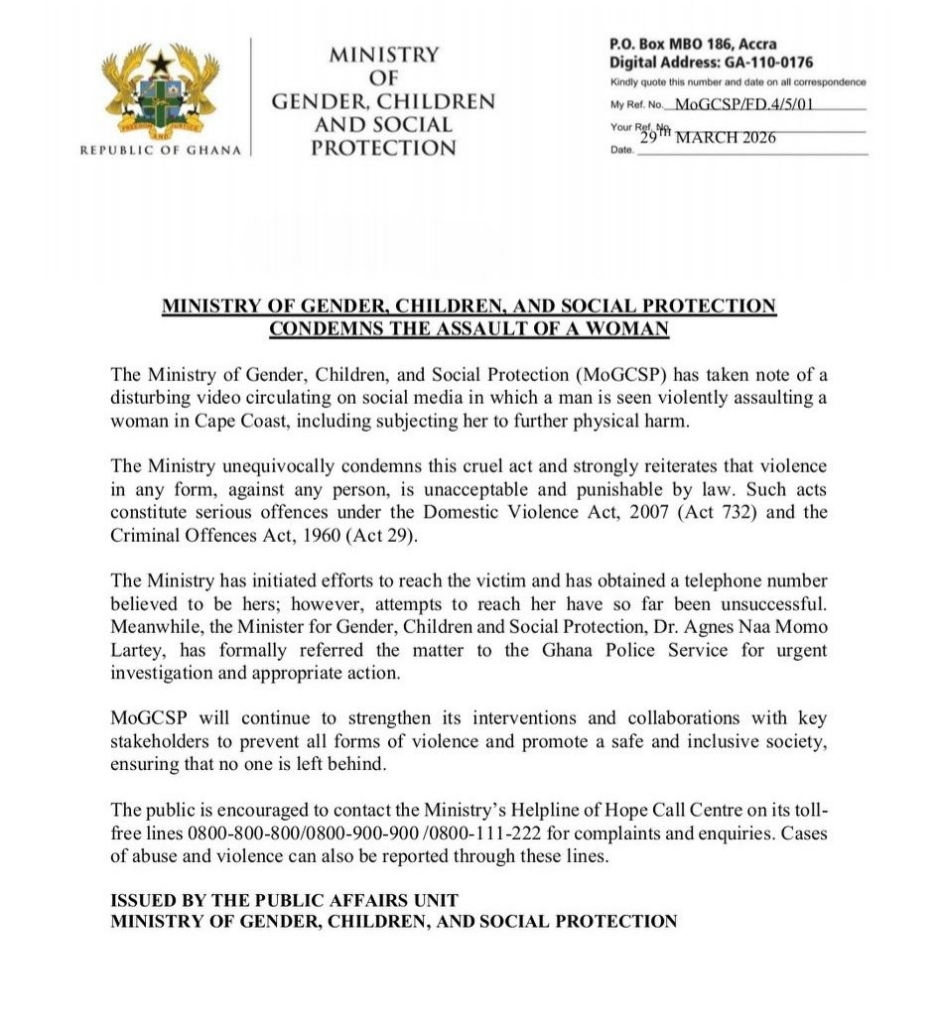
Ghana’s Ministry of Gender, Children, and Social Protection responded on Sunday, March 29, with a statement that left nothing ambiguous. Officials called the assault “cruel and unacceptable” and reminded Ghanaians that such conduct violates not one but two statutes — the Domestic Violence Act of 2007 and the Criminal Offences Act of 1960. Both carry penalties serious enough to change a perpetrator’s life. The Ministry said it had tracked down a phone number associated with the victim and attempted contact, but she had not responded by the time the statement went out.
Gender Minister Dr. Agnes Naa Momo Lartey moved beyond condemnation. She formally referred the case to the Ghana Police Service and demanded urgent action, placing the incident on official record and making inaction by investigators a political liability. “MoGCSP will continue to strengthen its interventions and collaborations with key stakeholders to prevent all forms of violence and promote a safe and inclusive society, ensuring that no one is left behind,” the Ministry’s statement read — a pledge that now has a specific, named case attached to it.
The victim’s silence is not surprising, and it should not be mistaken for indifference. Women caught in violent situations often weigh the danger of speaking up against the danger of staying quiet, and many conclude that engaging authorities creates more risk, not less. The Ministry’s failure to reach her underscores a structural problem: Ghana’s support systems for abuse survivors are frequently too thin on the ground to function in the critical hours after an incident, when victims most need a trusted point of contact.
For the Ghana Police Service, the public referral is a test. High-profile cases have stalled before, generating statements and sympathy but rarely producing swift arrests. Advocates tracking this case say the outcome will carry weight well beyond Cape Coast — it will signal whether the government’s language around gender violence translates into the kind of enforcement that actually deters the next attacker.
Ghanaians who need help or want to report abuse can reach the Ministry’s Helpline of Hope toll-free at 0800-800-800, 0800-900-900, or 0800-111-222. Saving those numbers costs nothing. Not saving them might cost everything.
Source: MyJoyOnline

